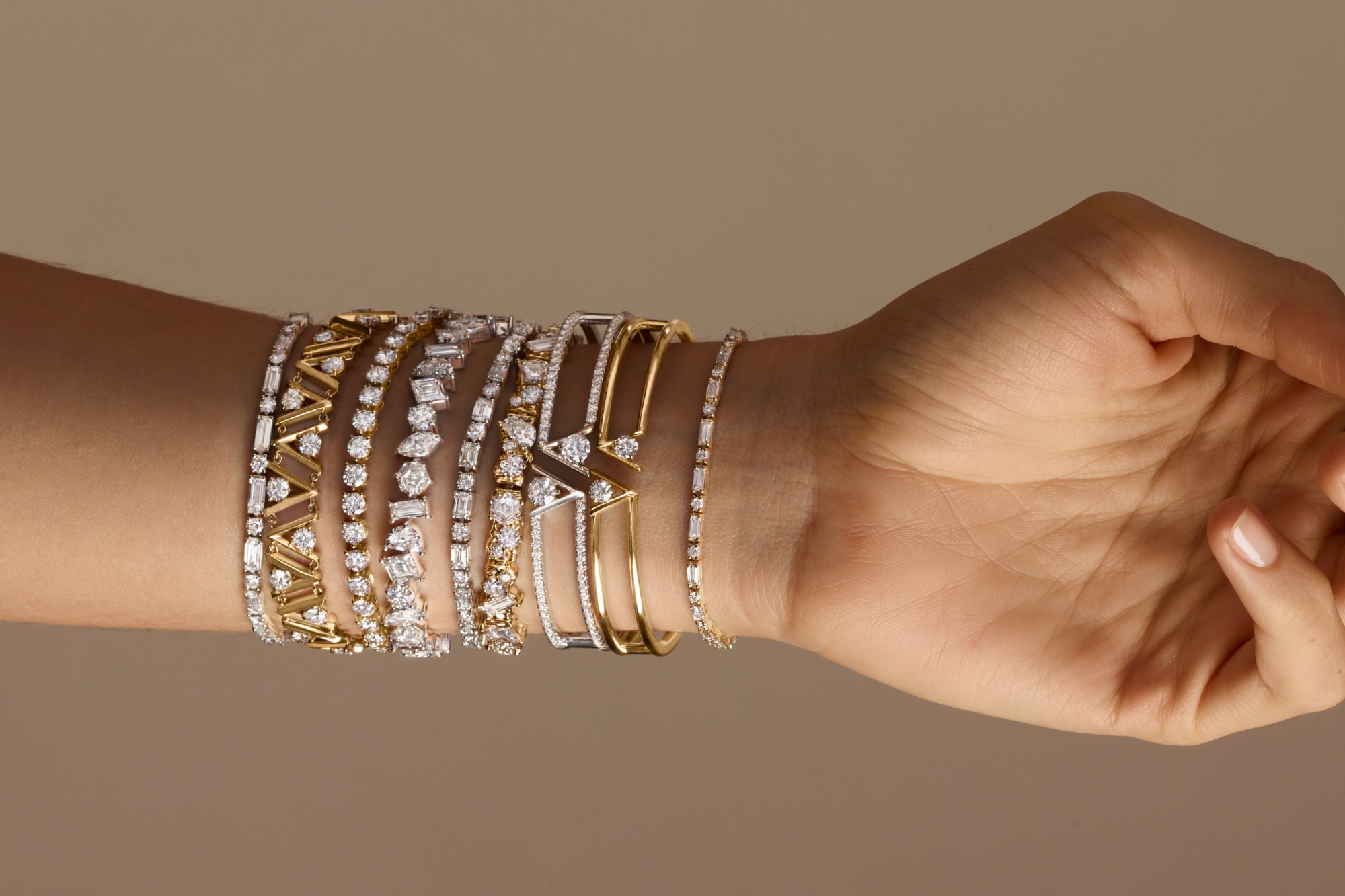
Bracelet stacking can turn a relatively simple jewellery combination into a distinctive part of an outfit. However, an interesting stack does not necessarily depend on wearing more pieces. The way different surfaces interact can have a much greater effect. Smooth metal, detailed links, polished beads, sparkling stones, and sculptural elements each respond differently to light and movement. Combining these characteristics thoughtfully creates depth without making the wrist look unnecessarily crowded.
Start With Contrasting Surface Finishes
Combining finishes that don’t appear the same is one of the easiest methods to add Texture. A highly polished bracelet has a clean reflective surface, while an intricately detailed piece creates smaller areas of light and shadow.
When several perfectly smooth bracelets are placed together, they can visually merge. Introducing one piece with engraving, stones, twisted details, or unusual links breaks that uniformity.
A selection of Pandora Jewellery can be approached with this contrast in mind. Rather than concentrating only on matching colours, look at whether individual surfaces appear sleek, sparkling, structured, rounded, or detailed. The differences between them can give the overall arrangement greater definition.
Change The Visual Weight Across The Wrist
Texture is also influenced by thickness. A stack made entirely from bracelets of the same width can appear flat even when the individual designs are attractive.
Try positioning a more substantial bracelet beside finer pieces. The thicker design provides an anchor, while narrower bracelets introduce lighter visual details. This variation prevents every element from competing equally for attention.
Balance is important here. A large centrepiece does not need several equally bold companions. Often, one substantial design surrounded by more delicate pieces produces a cleaner result.
Introduce Small Three-Dimensional Details
Texture does not have to come entirely from bracelet construction. Decorative elements can add raised shapes and changing dimensions.
Pandora Charms can introduce these smaller points of texture through differences in shape, detailing, and surface treatment. Instead of covering an entire bracelet, a few carefully positioned charms can create enough variation to contrast with smoother pieces elsewhere in the stack.
Spacing can be particularly useful. Leaving visible sections of the bracelet between decorative elements gives individual shapes room to stand out and keeps the overall arrangement from becoming visually dense.
Use Movement As Part Of The Texture
Some bracelets remain relatively fixed on the wrist, while others move more freely. Combining these behaviours introduces another form of contrast.
Flexible chains may shift as the hand moves, while structured bangles maintain a more consistent shape. Small hanging elements can create additional movement. Together, these characteristics make a stack appear different from one angle to another.
Movement also changes how surfaces catch the light, making polished and detailed sections more noticeable without requiring additional pieces.
Combine Structure With Softer Shapes
Shape contributes significantly to perceived texture. Straight edges and defined links create a structured appearance, while rounded beads, curved forms, and flowing chains provide a softer effect.
Different styles of Pandora Bracelets can be combined by considering their shapes rather than trying to make every design closely match. A structured piece placed between softer chain styles, for instance, can create a clear visual boundary within the stack.
Repeating one shape elsewhere can then help connect the arrangement. This gives the wrist a coordinated appearance without removing the contrast that makes stacking interesting.
Avoid Making Every Bracelet A Focal Point
A successful stack needs quieter areas. If every bracelet contains heavy detailing, numerous decorative elements, and strong texture, individual features can become difficult to distinguish.
Choose one or two pieces to provide the strongest visual interest. Let simpler bracelets act as separators. These calmer surfaces create breathing room and make detailed elements easier to notice.
It can also help to check the stack from a distance. A combination that looks appealing when examining each bracelet individually may feel too busy when viewed as part of a complete outfit.
Let Texture Create The Final Effect
Interesting bracelet styling is less about following a strict formula and more about controlling contrast. Smooth against detailed, fine beside substantial, structured next to flexible, and simple alongside decorative can all create visual depth.
By varying surface finishes, proportions, shapes, spacing, and movement, a bracelet stack can feel layered without appearing overloaded. Thoughtful texture gives each piece a clear role while allowing the entire combination to work as one coordinated look.

